
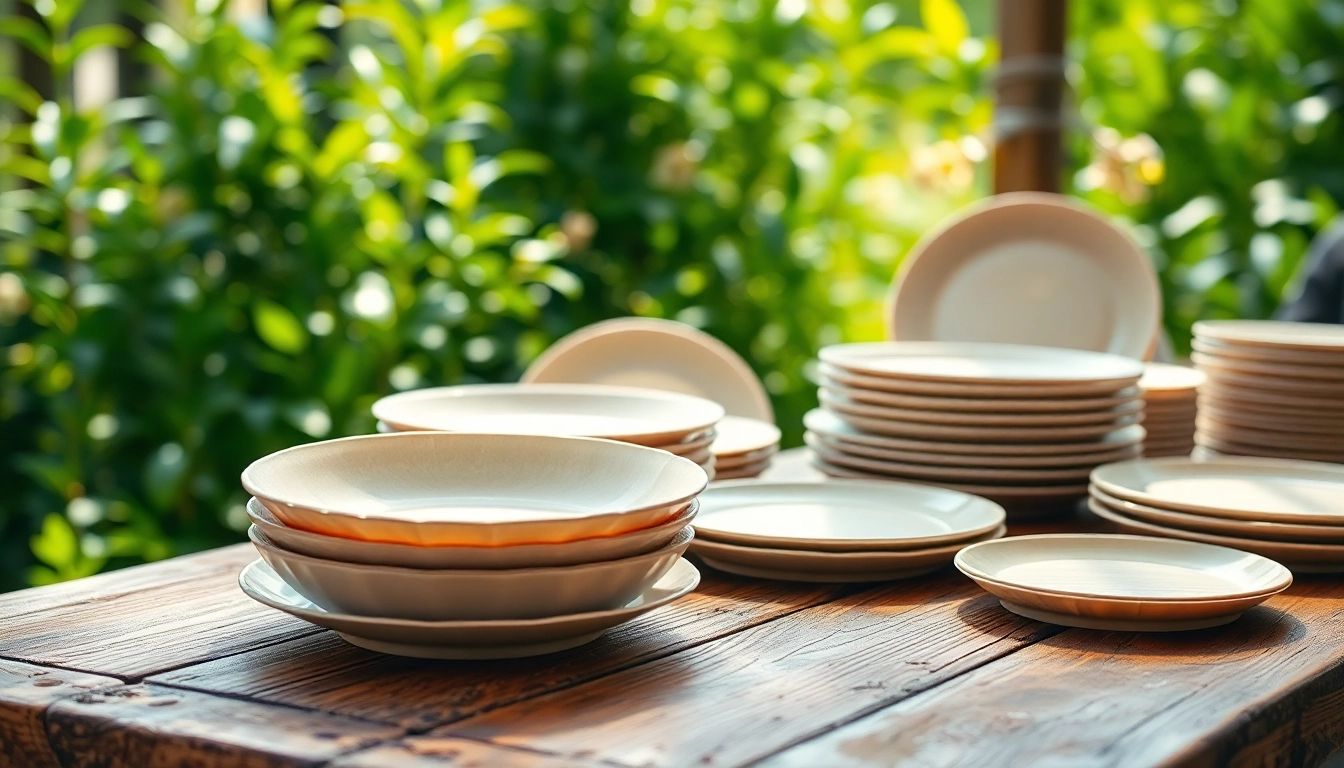

Understanding Compostable Plates
What Are Compostable Plates?
Compostable plates are innovative, eco-friendly alternatives to traditional disposable dinnerware made from materials that can degrade naturally in composting environments. Unlike plastic or even some paper products, which can take years or even centuries to break down, compostable plates are designed to return to the earth quickly and harmlessly. The organic materials used in compostable plates, such as sugarcane, bamboo, and other plant fibers, ensure that they can be composted, contributing to the reduction of landfill waste. Many consumers are turning towards compostable plates to promote sustainability and reduce their carbon footprint.
Materials Used in Compostable Plates
Compostable plates are made from various biodegradable materials. Some of the most common materials include:
- Sugarcane Bagasse: A byproduct of sugar extraction, this material is sturdy and can handle hot and cold foods well.
- Bamboo: Lightweight and strong, bamboo plates offer a natural aesthetic and can often be used for both cold and hot food applications.
- Wheat Straw: Another agricultural byproduct, wheat straw plates are an excellent biodegradable option and are often more affordable.
- Pulp: Made from recycled paper or cardboard, pulp plates provide durability and are suitable for various food types.
Benefits of Compostable Plates
The adoption of compostable plates comes with a variety of benefits:
- Environmental Impact: These plates help divert waste from landfills, as they break down naturally, enriching the soil instead of contributing to pollution.
- Reduced Carbon Footprint: Producing compostable plates typically involves fewer fossil fuel emissions, making them a more sustainable choice.
- Safety: Compostable plates are made from food-safe materials and do not leach harmful chemicals into food.
- Convenience: They offer the convenience of disposability without the environmental cost associated with traditional plastic or Styrofoam.
Types of Compostable Plates Available
Biodegradable Choices
Compostable plates come in various styles and specifications, which can suit different preferences and settings. Biodegradable choices exist, allowing consumers to opt for stylish yet environmentally friendly substitutes that maintain functionality. These plates often mimic the aesthetic appeal of traditional dinnerware while remaining entirely compostable, providing both form and function.
Sugarcane vs Bamboo Plates
When comparing sugarcane and bamboo plates, several factors come into play:
- Durability: Both materials offer robust options, with sugarcane plates being slightly thicker and sturdier than bamboo plates.
- Heat Resistance: Sugarcane plates generally perform better under heat, making them suitable for hot dishes. Bamboo plates are versatile but should be monitored when used for very hot foods.
- Aesthetic Appeal: Bamboo plates have a natural, rustic look that can elevate the dining experience, while sugarcane plates offer a more traditional disposable appearance.
Designs and Sizes
The designs and sizes of compostable plates vary widely. Common sizes include:
- Small plates: Ideal for appetizers or desserts.
- Main course plates: Typically larger, perfect for entrées.
- Dinner sets: Includes plates with matching cutlery and cups.
Moreover, innovative designs can include elegant shapes or compartments to separate different food items, catering to the needs of various events from casual gatherings to formal occasions.
How to Use Compostable Plates Effectively
Best Practices for Serving Food
Using compostable plates effectively requires adherence to certain best practices. Ensure that:
- The plates are compatible with the food being served, as some may not hold up well under particularly heavy or moist items.
- Do not overload the plates beyond their reasonable capacity to avoid spills and breakage.
- Use compostable utensils and cups to maintain the integrity of the eco-friendly theme.
Environmental Considerations
While compostable plates are a better alternative, it’s essential to consider their environmental impact comprehensively. How they are produced, transported, and disposed of plays a critical role. Whenever possible, locally sourced plates minimize the carbon footprint associated with transportation.
Storage and Handling Tips
Storing compostable plates properly will improve their longevity and usability:
- Store in a dry, cool place to prevent premature degradation.
- Avoid stacking excessive weight on compostable plates, as this can lead to warping.
- Keep away from direct sunlight which may affect their integrity.
Disposing of Compostable Plates Safely
Composting Process Explained
Composting is the process of decomposing organic matter into nutrient-rich soil. To compost plates:
- Ensure that they are indeed compostable; check for specific labeling or certifications.
- Place them in a compost bin where they can decompose with other organic materials.
- Monitor the composting process to ensure the right conditions (moisture, aeration) are maintained.
Where to Compost
Compostable plates can generally be composted in:
- Home compost bins, which can be purchased or easily built.
- Community gardens that offer composting services.
- Municipal composting programs, depending on location; always check local regulations.
Common Mistakes to Avoid
Several common pitfalls can impede successful composting:
- Not verifying plate materials; non-compostable plates contaminate compost and contribute to waste.
- Mixing compostable plates with recyclable materials; they do not belong together.
- Ignoring local guidelines; always follow the specific requirements for compost disposal in your area.
Frequently Asked Questions about Compostable Plates
Are compostable plates truly eco-friendly?
Yes, compostable plates are designed to break down naturally, unlike plastic. They contribute less to landfill waste and support environmental sustainability.
Can I microwave compostable plates?
Most compostable plates can withstand microwave use, but always check the manufacturer’s instructions to ensure safety.
How do I know if my plates are compostable?
Look for clear labeling stating “compostable” or check for certifications from reputable composting organizations.
What is the lifespan of compostable plates?
While they can be stored for a couple of years if kept in a cool, dry place, once exposed to heat or moisture, their lifespan shortens significantly.
Can I reuse compostable plates?
While reusing is generally discouraged, if they are lightly used and not soiled excessively, they may be suitable for light, dry food items.