
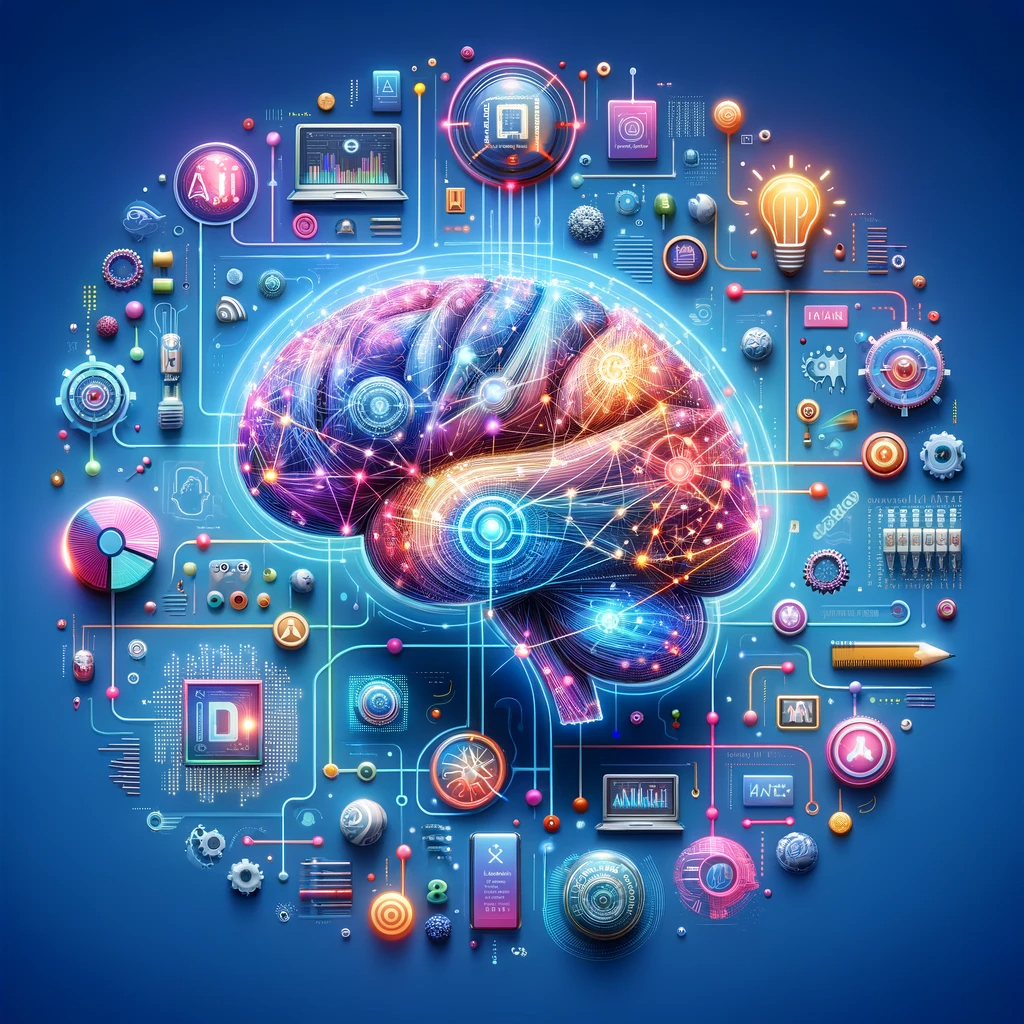

The landscape of education and research is rapidly evolving, driven by the need to process, retain, and apply large volumes of information efficiently. Traditional learning methods, such as linear note-taking or hierarchical outlines, often fall short when it comes to fostering deep understanding, creativity, and knowledge retention. Neural mindmap technology has emerged as a powerful solution, leveraging artificial intelligence and cognitive science to enhance learning and research processes.
Neural mindmaps are intelligent, visual knowledge systems that mirror the way the human brain organizes and connects information. By transforming complex ideas into interconnected nodes, these systems improve comprehension, memory, and analytical thinking. For platforms like 1CPublishing, which specialize in AI-driven content creation and structured nonfiction manuscripts, Neural mindmaps provide an invaluable tool for organizing ideas and facilitating high-quality knowledge production.
- Understanding Neural Mindmaps in Education
- Applications in Academic Learning
- Neural Mindmaps in Research
- Advantages of Neural Mindmaps for Education and Research
- Implementing Neural Mindmaps in Educational Platforms
- Neural Mindmaps for Scientific and Academic Research
- Design Principles for Effective Neural Mindmaps in Education and Research
- Future Trends in Neural Mindmaps for Learning and Research
- Conclusion
Understanding Neural Mindmaps in Education
Neural mindmaps are digital frameworks that represent knowledge in dynamic, networked structures. Unlike conventional mind maps, which rely on rigid hierarchies, Neural mindmaps adapt and grow intelligently as new concepts are introduced.
AI-Powered Visual Learning
Artificial intelligence is at the heart of Neural mindmaps. Natural language processing and machine learning allow these tools to understand the meaning of text, identify semantic relationships, and propose relevant connections between ideas. As a result, users receive an adaptive learning environment that supports discovery and insight.
Enhancing Cognitive Connections
Neural mindmaps emulate the associative nature of human cognition. Each node represents a concept, while connections illustrate relationships, context, and dependencies. This design strengthens the brain’s neural pathways, making it easier to retain and recall information during study or research.
Applications in Academic Learning
Neural mindmaps are transforming education by providing tools that enhance comprehension, memory, and engagement.
Facilitating Complex Subject Mastery
In subjects such as science, history, and mathematics, concepts are often interrelated and complex. Neural mindmaps help students visualize these connections, revealing how individual ideas fit into broader frameworks. This improves understanding and promotes deeper learning.
Personalized Learning Paths
Each learner has a unique cognitive style. Neural mindmaps can adapt to these differences, highlighting critical nodes, suggesting review areas, and emphasizing links relevant to individual progress. This personalized approach enhances learning efficiency and retention.
Supporting Exam Preparation
Neural mindmaps allow students to consolidate large amounts of information into structured, visual summaries. By organizing concepts into interconnected clusters, learners can quickly identify key ideas and review relationships, leading to more effective exam preparation and higher retention rates.
Neural Mindmaps in Research
Research often requires synthesizing vast amounts of information, identifying patterns, and generating novel insights. Neural mindmaps are particularly well-suited to these tasks.
Organizing Literature and Sources
Researchers frequently face the challenge of managing extensive literature and data. Neural mindmaps provide a visual, dynamic structure to organize sources, summarize findings, and connect related studies. This approach simplifies knowledge management and highlights gaps in the literature.
Enhancing Critical Thinking
Neural mindmaps encourage researchers to explore relationships between concepts, evaluate assumptions, and identify potential implications. By visualizing how ideas intersect, researchers can generate new hypotheses, detect patterns, and foster innovation.
Streamlining Collaborative Research
Neural mindmaps support collaborative workflows by allowing multiple researchers to contribute to a shared knowledge map. Teams can co-create, edit, and explore connections in real-time, improving coordination, transparency, and collective insight.
Advantages of Neural Mindmaps for Education and Research
Neural mindmaps offer several benefits that make them indispensable tools for learners and researchers alike.
Improved Memory Retention
By visually representing relationships between ideas, Neural mindmaps strengthen associative learning. Users are more likely to remember information because it is connected to other knowledge rather than isolated in text or notes.
Enhanced Problem-Solving Skills
Neural mindmaps help learners and researchers break down complex problems into manageable components. By analyzing connections and dependencies, users can approach problem-solving strategically and creatively.
Efficient Knowledge Synthesis
Neural mindmaps simplify the integration of diverse information sources. Researchers can quickly identify overlaps, contradictions, and emerging themes, allowing for faster and more accurate synthesis of knowledge.
Implementing Neural Mindmaps in Educational Platforms
Educational technology platforms are increasingly incorporating Neural mindmaps to enhance teaching and learning experiences.
Adaptive Learning Environments
Neural mindmaps can power adaptive educational platforms that tailor content delivery to individual learners. By tracking progress and understanding, the system can recommend topics, highlight gaps, and provide contextualized feedback.
Integration With AI-Powered Publishing
Platforms like 1CPublishing can utilize Neural mindmaps to streamline manuscript creation, course design, and educational content structuring. Neural mindmaps allow AI systems to generate coherent, well-organized material that aligns with learning objectives and knowledge frameworks.
Supporting Interactive Learning
Neural mindmaps can transform passive learning into interactive experiences. Students can engage with nodes, explore connections, and contribute their insights, fostering active participation and deeper comprehension.
Neural Mindmaps for Scientific and Academic Research
Neural mindmaps are invaluable in research contexts, providing tools to manage complexity and accelerate discovery.
Mapping Research Questions
Complex research projects often involve multiple interdependent questions. Neural mindmaps help researchers visualize these relationships, prioritize tasks, and identify critical pathways for investigation.
Data Visualization and Analysis
Neural mindmaps can integrate with data sources to represent quantitative and qualitative findings visually. This aids in detecting trends, anomalies, and correlations, facilitating evidence-based conclusions.
Knowledge Dissemination
By presenting research insights in a structured visual format, Neural mindmaps enhance communication of complex ideas to colleagues, students, or the wider academic community. This improves understanding and engagement with research findings.
Design Principles for Effective Neural Mindmaps in Education and Research
The effectiveness of Neural mindmaps relies on thoughtful design that balances clarity, intelligence, and user engagement.
Clarity and Intuitive Navigation
A well-designed Neural mindmap presents information in a clear, accessible way. Adaptive layouts, hierarchical clustering, and interactive navigation help users explore complex knowledge networks without feeling overwhelmed.
Human-Centered AI
AI features in Neural mindmaps should enhance human thinking. Suggestions, pattern detection, and automated connections should be explainable and adjustable, allowing users to retain control while benefiting from intelligent assistance.
Scalability and Flexibility
Educational and research environments often deal with expanding datasets and evolving knowledge. Neural mindmaps must scale efficiently, allowing new concepts to be integrated seamlessly without compromising clarity or usability.
Future Trends in Neural Mindmaps for Learning and Research
Neural mindmap technology is evolving rapidly, promising new possibilities in education and research.
Integration With Generative AI
Next-generation Neural mindmaps will integrate with generative AI, enabling automated summarization, content creation, and knowledge expansion directly within the map. This will accelerate learning, research, and publication processes.
Collaborative Knowledge Networks
Advances in collaborative AI will allow multiple users to interact with the same Neural mindmap simultaneously. This real-time co-creation fosters collective intelligence, accelerates innovation, and strengthens research outcomes.
Personalized Learning Ecosystems
Neural mindmaps will continue to enhance personalized education, adapting dynamically to learners’ cognitive profiles, learning goals, and knowledge gaps. This will make education more efficient, engaging, and effective.
Conclusion
Neural mindmap technology is transforming education and research by providing intelligent, AI-powered tools for organizing, understanding, and applying knowledge. By mirroring the brain’s natural associative processes, these tools enhance learning, memory retention, problem-solving, and collaborative discovery. Whether for students, educators, or researchers, Neural mindmaps offer a smarter, more effective way to navigate complex information and accelerate intellectual growth.
For platforms like 1CPublishing, Neural mindmaps play a crucial role in structuring content, generating high-quality manuscripts, and optimizing educational resources. As AI continues to advance, the applications of Neural mindmap technology in education and research will expand, establishing it as an indispensable tool for knowledge-driven success.