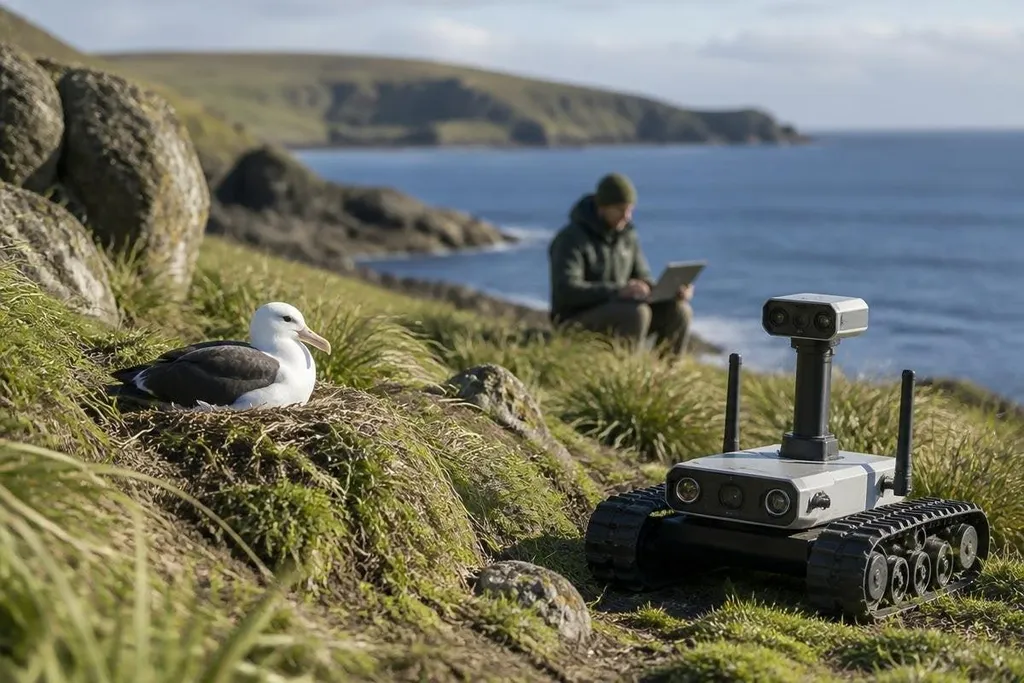
A wildlife robot can watch a nesting site, carry a camera through rough ground, or collect data without sending a person into the same space. The useful question is where a robot reduces disturbance, improves safety, or lets a small conservation team check more ground.
- Cameras can record animals without a person standing nearby.
- Ground robots can reach places that are unsafe or hard to enter.
- Sensor data still needs people who can judge what it means.
Where robots can help
Wildlife work often depends on repeated checks. A person may need to visit a remote site to inspect nests, count animals, check a fence, or look for signs of illegal activity. A robot can repeat some of those tasks while the team stays farther away.
That distance can matter for species that avoid people. A small ground robot with cameras may move along a marked route while sending video back to a ranger or researcher. An aerial robot can view a wide area from above, but noise, flight rules, and battery life limit where it can operate.
The robot does not need to replace a field worker. It can take the first look, record a change, and send a person to the site when the evidence calls for it. That helps a team spend its time on decisions rather than routine travel.
What the robot can measure
A camera gives the team a visual record, while other sensors can add heat, sound, location, or air data. Thermal cameras may help locate animals in low light. Microphones can record calls.
GPS can mark where a sighting took place, so later visits use the same route. These tools work best when the task has a clear signal. A camera can show whether an animal is present, but it may not show why the animal left an area.
A sound sensor can record a call, but the recording still needs checking when wind, insects, or other animals create noise.
For a conservation team comparing field robots, reports from Robot24 can tie a machine’s sensor, route, weather, task, and test date to its result. Those details help you judge whether it can gather useful evidence before carrying samples or placing sensors in the field.
It can also carry a small sample container or place a sensor at a fixed point. The useful design depends on the species, terrain, weather, and task. A tracked vehicle may work on soil but fail in deep mud. A flying system may reach a site quickly but struggle in strong wind.
The limits are part of the design
Wildlife robots can disturb animals if they move too close, make noise, shine lights, or appear at the wrong time. The machine must follow a distance rule set by the field team, and the team must check whether the animal changes its behavior around the robot.
Data creates another problem. A long video record can contain more material than a small team can review. Software may sort clips or flag movement, but a flagged clip is not proof of a species, a threat, or a population change.
The system also needs a recovery plan. A robot with a flat battery, lost signal, damaged wheel, or blocked route can become waste in a protected area. Field crews need a way to locate it, shut it down, and remove it without causing more harm.
I’d fund better sensors and field service plans before buying a more complex robot body. A machine that collects clean data for six months is more useful than one that performs a short demo and then sits in storage.
A practical choice guide
Before choosing a wildlife robot, check these points:
- Name the task: Write down the decision the data must support.
- Set the distance: Define how close the robot may come to the animals.
- Test the ground: Check mud, sand, slopes, water, plants, and likely obstacles.
- Plan the data: Decide who reviews the records and how long storage lasts.
- Prepare recovery: Keep a route, spare power, location method, and shutdown plan.
- Measure behavior: Compare animal activity with and without the robot present.
The strongest case for wildlife robots is narrow and practical: repeated observation in places where people are costly, unsafe, or too noticeable. Conservation teams should start with one task, one route, and a clear measure of success, then expand only when the robot leaves the animals and the data better off.