
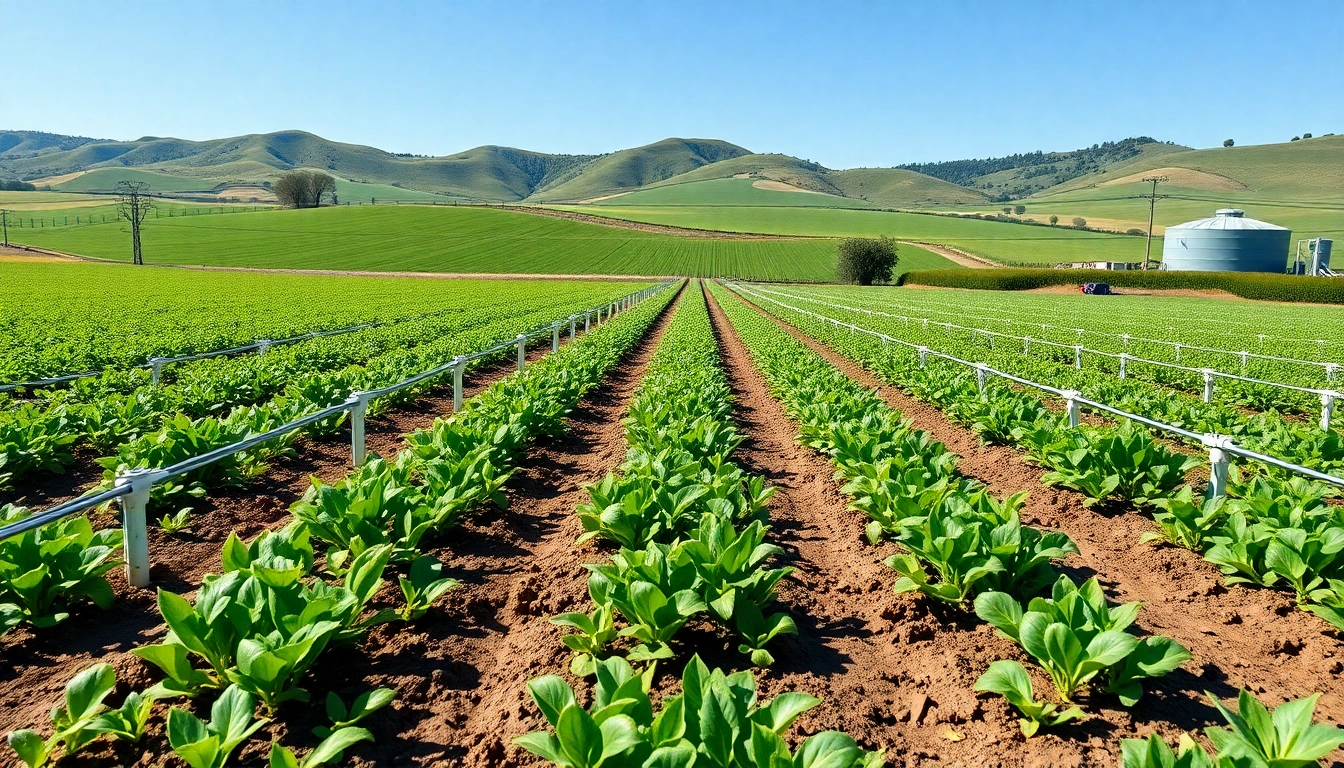

Understanding Land Irrigation
Definition and Importance of Land Irrigation
Land irrigation refers to the artificial application of water to soil or land to assist in the growth of crops and vegetation. It is a critical component in agricultural practices, particularly in regions where rainfall is insufficient to sustain plant growth. By providing necessary moisture to crops, farmers can ensure consistent yields and quality produce. The importance of land irrigation extends beyond mere crop production; it plays a crucial role in food security, economic viability, and environmental sustainability.
Efficient use of land irrigation methods helps in managing water resources effectively, promoting agricultural productivity, and supporting livelihoods, especially in arid and semi-arid areas. It reduces dependency on rain and ensures that farmers can cultivate throughout the year, leading to increased agricultural outputs.
Types of Land Irrigation Methods
Various methods of land irrigation are employed worldwide, each suitable for different types of crops, soil, and climate conditions. The major types include:
- Surface Irrigation: Water is applied and distributed over the soil surface by gravity. This is one of the oldest and most commonly used methods, efficacious for flat fields.
- Drip Irrigation: Water is delivered directly to the plant roots through a system of tubing and emitters. This method is highly efficient, minimizes evaporation and runoff, and reduces water usage.
- Sprinkler Irrigation: Water is distributed through a system of pipes and sprayed over the crops through sprinklers, simulating rainfall. This method is adaptable to various terrains.
- Subsurface Irrigation: Water is applied below the soil surface, allowing for moisture conservation and reduced evaporation. This method is particularly useful in sandy soils.
- Flood Irrigation: Fields are flooded with water, allowing it to percolate through the soil. This method can be wasteful and is best suited for certain crops and situations.
Choosing the Right Land Irrigation System
Choosing the appropriate irrigation system is vital for optimizing water use and ensuring sustainable agricultural practices. Factors to consider include:
- Crop Type: Different crops may have varying water needs; selecting a system that meets these requirements is crucial.
- Soil Type: The infiltration rate, water retention capabilities, and texture of the soil will impact which system is most effective.
- Water Availability: Assessing the availability and quality of water sources is vital in determining the most suitable irrigation method.
- Cost and Maintenance: Evaluating the initial costs and long-term maintenance requirements can influence the choice of an irrigation system.
- Environmental Impact: Consideration of the environmental consequences, such as water logging and soil salinity, is essential.
Benefits of Efficient Land Irrigation
Enhanced Crop Yields through Optimized Water Usage
Efficient land irrigation directly correlates with enhanced crop yields. By ensuring that plants receive the right amount of water at the right time, farmers can significantly boost productivity. Research indicates that optimized irrigation practices can increase crop yields by 20-50%. Additionally, precision irrigation technologies, like drip systems, ensure minimal water wastage, allowing more crops to be cultivated on the same land.
Reducing Soil Erosion and Conservation
Soil erosion is a major concern in agriculture, often exacerbated by poor irrigation practices. By employing efficient irrigation methods, farmers can reduce runoff and minimize soil erosion. Methods such as drip irrigation and subsurface irrigation promote better water management, ensuring that moisture is retained in the soil. This conservation of moisture directly contributes to improving soil health and maintaining its structure.
Cost-Effectiveness of Modern Land Irrigation
The shift towards modern land irrigation techniques brings notable cost savings in the long run. Although initial investments may be high for systems like drip irrigation, the reduced water usage, lower energy costs, and increased productivity often lead to a quicker return on investment. Furthermore, effective irrigation leads to improved crop quality, allowing farmers to fetch better prices in the market.
Challenges in Implementing Land Irrigation
Common Barriers to Adoption
Despite the numerous benefits, several challenges hinder the widespread adoption of efficient irrigation systems. Common barriers include:
- High Initial Costs: New systems, especially modern technologies, often require significant upfront investments that may deter some farmers.
- Lack of Access to Technology: In many regions, particularly in developing countries, access to advanced irrigation technology and training can be limited.
- Infrastructure Needs: Effective irrigation systems often require additional infrastructure, such as pumps and filtration systems, which can be costly and logistically challenging.
- Knowledge Gaps: Many farmers may not be familiar with the latest irrigation techniques or how to implement them effectively.
Environmental Impact Considerations
Implementing land irrigation can have both positive and negative environmental impacts. Over-irrigation may lead to waterlogging, salinization of soils, and depletion of local water resources. Therefore, it is crucial to adopt practices that are environmentally sustainable. Techniques such as rainwater harvesting, integrated water resource management, and using native crops that require less water can mitigate adverse impacts.
Overcoming Technical Limitations
Technical limitations can hinder the effectiveness of irrigation systems. Farmers might face issues like equipment malfunction, lack of appropriate technology, or difficulty in managing complex irrigation systems. To overcome these challenges, continuous training and education, along with the integration of smart irrigation technologies that automate processes, are necessary. Collaborating with agricultural extension services can also provide valuable support.
Best Practices for Effective Land Irrigation
Integrating Technology with Traditional Practices
Combining modern technologies with traditional irrigation practices can yield significant benefits. For instance, using soil moisture sensors alongside traditional practices can help farmers make informed decisions about when to irrigate. This integration can enhance efficiency while respecting traditional methods that have worked over generations.
Monitoring and Adjusting Irrigation Systems
Continuous monitoring of irrigation systems is essential to adapt to changing conditions such as weather patterns, soil moisture levels, and crop needs. Implementing regular maintenance schedules and utilizing data analytics can help in assessing system performance and making necessary adjustments. Advanced tools like remote sensing and automated systems can assist in real-time monitoring, leading to improved efficiency.
Training Farmers and Stakeholders
Education is key to successful land irrigation management. Providing training sessions for farmers on the benefits and operation of modern irrigation systems can increase adoption rates and success. Collaborating with agricultural extension services, NGOs, and government bodies can enhance the dissemination of knowledge and ensure that farmers are equipped to make smart irrigation choices.
Future Trends in Land Irrigation
Smart Irrigation Technologies and Innovations
The future of land irrigation is leaning towards smart technologies that enhance efficiency and conservation. Innovations like sensor-based irrigation, automated drip systems, and AI-driven irrigation scheduling are becoming more prevalent. These technologies help optimize water usage by delivering precise amounts of water when needed, thus reducing wastage and lowering costs.
Adapting to Climate Change Challenges
With climate change presenting significant challenges to agriculture, adapting land irrigation methods will be crucial. Rising temperatures, altered precipitation patterns, and increased frequency of droughts necessitate innovative water management strategies. Developing drought-resistant crops and promoting sustainable irrigation practices will be essential in ensuring food security in changing climates.
Global Case Studies and Success Stories
Several countries have successfully implemented innovative land irrigation practices, showcasing the potential of efficient water management. For example, Israel’s extensive use of drip irrigation has transformed arid land into productive agricultural areas. Similarly, success stories from countries in sub-Saharan Africa demonstrate how modern irrigation techniques can uplift entire communities by enhancing agricultural productivity and sustainability.
Frequently Asked Questions
What is land irrigation?
Land irrigation is the artificial application of water to soil to facilitate crop growth, crucial for food production and sustainability.
What are the different methods of irrigation?
The primary irrigation methods include surface, drip, sprinkler, subsurface, and flood irrigation techniques, each suitable for various conditions.
How can irrigation improve crop yields?
When optimally managed, irrigation ensures crops receive adequate moisture, leading to increased growth, quality, and yield.
What challenges are faced in irrigation adoption?
Challenges include initial costs, lack of accessibility to technology, infrastructure requirements, and knowledge gaps among farmers.
What are future trends in irrigation technology?
Future trends include smart irrigation systems, automation, and adaptation strategies for climate change to enhance efficiency and sustainability.