
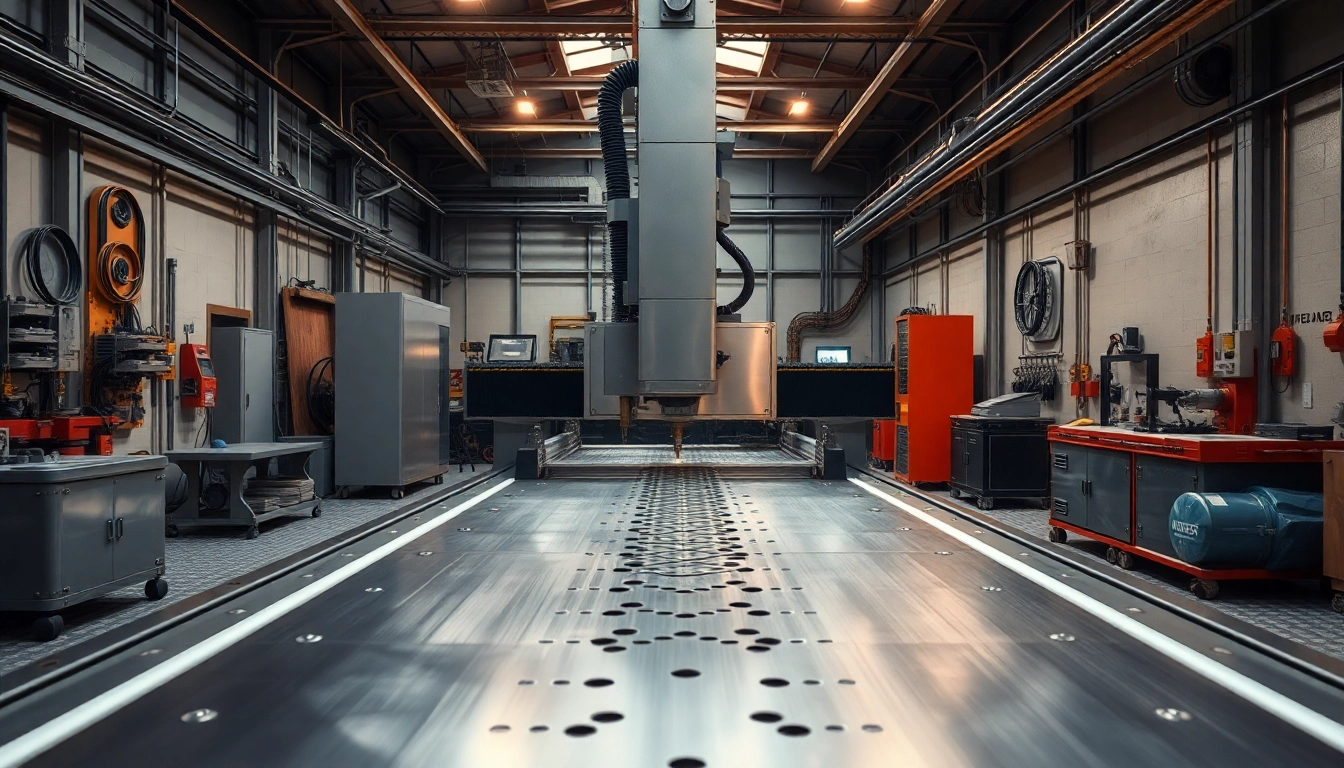

Understanding Precision Plate Cutting
What is Precision Plate Cutting?
Precision plate cutting is a manufacturing process that involves cutting large sheets or plates of material with high accuracy and minimal waste. This technique is vital for industries requiring intricate designs and strong structural integrity in their components. The process often employs advanced cutting methods to achieve the desired dimensions and quality, making it a preferred choice in fabrication, aerospace, automotive, and construction sectors. With technologies evolving, the precision plate cutting landscape is continuously enhancing, providing manufacturers with innovative solutions to meet their production demands.
Applications of Precision Plate Cutting
Precision plate cutting finds applications across a wide range of industries due to its efficiency and accuracy. Some key sectors include:
- Aerospace: Used for crafting lightweight yet strong components in aircraft, ensuring safety and performance.
- Automotive: Essential in producing parts that require exact tolerances for optimal functioning and durability.
- Construction: Supports the creation of building materials with precise specifications for structural applications.
- Manufacturing: Enhances the production line for various machinery components, allowing for streamlined processes.
- Art and Design: Facilitates artistic expressions through metal cutting for installations and sculptures.
Benefits of Precision Plate Cutting
Utilizing precision plate cutting presents numerous advantages including:
- Accuracy: Achieves tight tolerances and intricate designs, minimizing the need for subsequent adjustments.
- Waste Reduction: Maximizes material use by optimizing cutting patterns and minimizing off-cuts.
- Versatility: Capable of handling various materials, including metals, plastics, and composites.
- Efficiency: Speeds up production timelines by using automated technologies and reducing manual labor.
- Improved Quality: Enhances the overall quality of finished products, which is crucial in competitive markets.
Technologies Used in Precision Plate Cutting
Types of Cutting Machines
There are several types of cutting machines employed in precision plate cutting, each offering unique capabilities:
- Laser Cutters: Employ focused beams of light to melt or vaporize material, achieving extreme precision.
- Plasma Cutters: Use high-temperature plasma to cut through thick materials quickly, ideal for larger plates.
- Water Jet Cutters: Utilize high-pressure water streams mixed with abrasive particles, suitable for sensitive materials.
- Oxy-Fuel Cutters: Use a flame to cut ferrous metals, effective for thicker materials but less commonly used for precision.
- CNC Machines: Automated systems that control cutting tools with computer precision, allowing for complex designs.
Software for Precision Plate Cutting
Modern precision plate cutting relies heavily on sophisticated software to optimize the cutting process:
- CAD Software: Assists in designing the parts and creating templates for cutting machines.
- CAM Software: Converts CAD designs into machine language, guiding cutting operations automatically.
- Nesting Software: Optimizes the arrangement of patterns on plates to minimize waste, ensuring efficiency.
- Simulation Software: Helps simulate cutting processes to identify potential issues before actual cutting.
Materials Suitable for Precision Plate Cutting
A range of materials can be processed with precision plate cutting techniques, including:
- Steel: Commonly used in construction and manufacturing due to its strength and versatility.
- Aluminum: Lightweight yet strong, often used in aerospace and automotive applications.
- Plastic: Suitable for industries such as electronics and furniture, allowing for unique designs and finishes.
- Composite Materials: Increasingly utilized in specialized applications where strength-to-weight ratio is crucial.
- Glass: Precision cutting techniques allow for intricate designs in architecture and art.
Best Practices in Precision Plate Cutting
Preparation Before Cutting
Proper preparation is critical for achieving optimal results in precision plate cutting. Key steps include:
- Material Inspection: Check for defects or irregularities that may affect the cutting process.
- Maintenance of Equipment: Ensure machines are calibrated and in good working condition to prevent errors.
- Design Review: Verify design files and cutting paths to confirm accuracy before starting the cutting process.
- Setting Up Proper Work Environment: Create a clean and organized workspace to enhance safety and efficiency.
Safety Considerations
Safety must be a top priority in precision plate cutting environments. Essential measures include:
- Personal Protective Equipment (PPE): Ensure workers wear suitable gear such as gloves, goggles, and protective clothing.
- Training: Provide extensive training on machine operation and safety protocols to prevent accidents.
- Emergency Preparedness: Develop and communicate emergency plans to handle potential incidents.
- Regular Safety Audits: Conduct periodic safety checks to ensure compliance with regulations and standards.
Quality Control Measures
Implementing robust quality control practices is crucial for maintaining high standards in precision plate cutting:
- Dimensional Inspections: Use tools and gauges to check cut parts against specifications.
- Visual Inspections: Regularly examine finished pieces for surface quality and finish.
- Document Control: Maintain accurate records of cutting parameters and settings for traceability.
- Feedback Loops: Create channels for operators to provide input on machine performance and quality issues.
Common Challenges in Precision Plate Cutting
Dealing with Material Variability
Material variability can lead to challenges in achieving consistent quality. Solutions include:
- Conduct thorough inspections of incoming materials.
- Implement standardized processes to accommodate minor variations.
- Utilize adaptive cutting technologies that can adjust settings based on real-time material assessments.
Minimizing Waste Generation
Reducing waste is critical both economically and environmentally. Strategies include:
- Employ advanced nesting software to optimize material usage.
- Train operators on efficient cutting patterns and techniques.
- Recycle scrap material where feasible to further minimize waste.
Cost Management Techniques
Managing costs effectively is vital for maintaining profitability in precision plate cutting. Key approaches include:
- Bulk Purchasing: Source materials in larger quantities to benefit from lower pricing.
- Operational Efficiency: Streamline processes to reduce labor and machine downtime.
- Regular Equipment Maintenance: Reduce the likelihood of unexpected breakdowns that can lead to costly delays.
Future Trends in Precision Plate Cutting
Advancements in Technology
The future of precision plate cutting is promising, with advancements driving innovation:
- AI and Machine Learning: Enhancing predictive maintenance and optimizing cutting parameters based on historical data.
- Smart Automation: Integration of robotics for increased efficiency and reduced labor costs.
- IoT Integration: Connecting machines to the internet for real-time monitoring and data analytics.
Integration with Smart Manufacturing
As industries adopt smart manufacturing practices, precision plate cutting will evolve to fit into this paradigm:
- Real-time Data Sharing: Seamless communication between machines to streamline workflows.
- Customization: Enhanced capabilities of producing custom components while maintaining efficiency.
- Supply Chain Integration: Aligning cutting operations with overall supply chain management for better inventory control.
Sustainability in Precision Plate Cutting
A growing focus on sustainability is shaping the future of precision plate cutting:
- Energy Efficiency: Innovations aimed at reducing energy consumption during the cutting process.
- Material Recycling: Increased emphasis on recycling scrap materials and reusing waste.
- Sustainable Materials: Promoting the use of eco-friendly materials in production processes.
Frequently Asked Questions
1. What materials can be used for precision plate cutting?
Precision plate cutting can handle various materials including steel, aluminum, plastics, composites, and glass, depending on the application requirements.
2. How does precision plate cutting minimize waste?
By using advanced nesting software and optimized cutting patterns, precision plate cutting reduces off-cuts and maximizes material efficiency.
3. What safety measures are crucial in precision plate cutting?
Key safety measures include personal protective equipment, regular training, and emergency preparedness to ensure a safe working environment.
4. How is quality controlled in precision plate cutting?
Quality control involves dimensional checks, visual inspections, document control, and feedback mechanisms from operators to maintain high standards.
5. What future trends are emerging in precision plate cutting?
Future trends include AI advancements, automation integration, and a focus on sustainability, shaping a more efficient and eco-friendly cutting landscape.